|
|
|
|
|
| ±¹³»µµ¼ > ´ëÇб³Àç/Àü¹®¼Àû > ¾î¹®ÇÐ°è¿ |
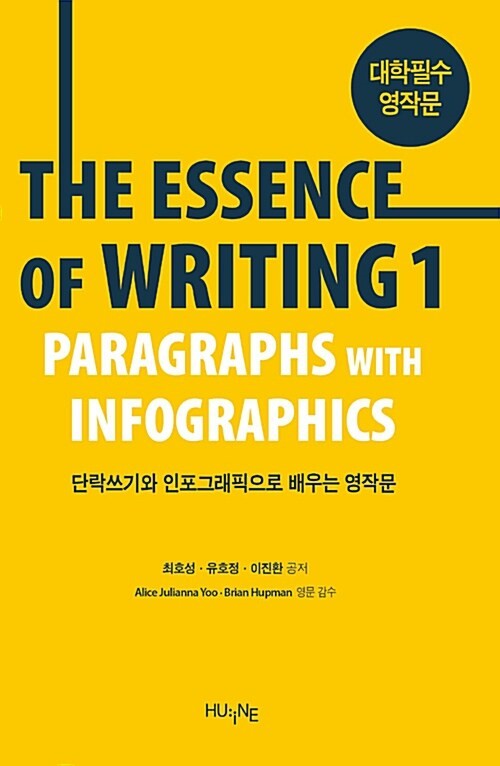
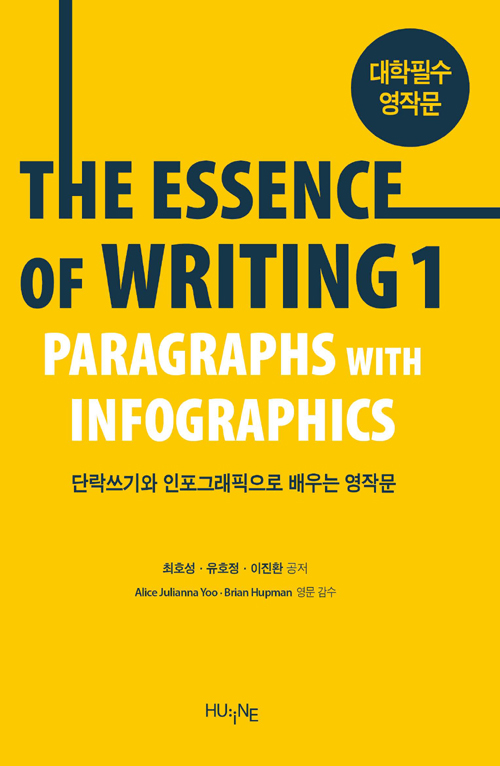
The Essence of Writing 1 - ´Ü¶ô¾²±â¿Í ÀÎÆ÷±×·¡ÇÈÀ¸·Î ¹è¿ì´Â ¿µÀÛ¹® |
|
|
|
|
|
2018³â 02¿ù 27ÀÏ Ãâ°£ |
Á¤°¡ 10,000¿ø |
ÆäÀÌÁö 136 Page |
|
|
|
|
 |
|
|
Preface _ 5
Introduction What Is Writing? ¡¤¡¤¡¤¡¤¡¤¡¤ 13 The Essence of Writing: Paragraph ¡¤¡¤¡¤¡¤ 14 The Important Elements of a Paragraph ¡¤¡¤ 16 Infographic: Visualizing Information ¡¤¡¤¡¤¡¤¡¤¡¤ 17
Unit 1: Narration ¡¤¡¤¡¤¡¤¡¤ 19 Warm-up Activity ¡¤¡¤ 21 What Is Narration? ¡¤¡¤¡¤¡¤¡¤¡¤¡¤ 22 Narration Strategies 23 Sample Narration Paragraph ¡¤¡¤¡¤¡¤¡¤¡¤ 24 Brainstorm an Idea ¡¤¡¤¡¤¡¤¡¤ 28 Draft an Infographic and a Paragraph ¡¤ 30 Feedback Practice 31 Writing Tip: Make the Subject Do the Action of Verb ¡¤¡¤ 33 Narration Paragraph Checklist ¡¤ 35 Students¡¯ Narration Paragraphs ¡¤¡¤¡¤¡¤¡¤ 36
Unit 2: Argument ¡¤¡¤¡¤ 39 Warm-up Activity ¡¤¡¤ 41 What Is Argument? ¡¤¡¤¡¤¡¤ 42 Argument Strategies ¡¤¡¤¡¤¡¤¡¤¡¤¡¤ 43 Sample Argument Paragraph ¡¤¡¤¡¤ 45 Brainstorm an Idea ¡¤¡¤¡¤¡¤¡¤ 49 Draft an Infographic and a Paragraph ¡¤ 51 Feedback Practice 52 Writing Tip: Avoid Nominalizations ¡¤ 54 Argument Paragraph Checklist ¡¤¡¤¡¤¡¤¡¤¡¤ 56 Students¡¯ Argument Paragraphs ¡¤¡¤¡¤ 57
Unit 3: Comparison and Contrast ¡¤ 59 Warm-up Activity ¡¤¡¤ 61 What Is Comparison and Contrast? ¡¤¡¤ 62 Comparison-and-contrast Strategies ¡¤¡¤¡¤¡¤ 63 Sample Comparison-and-contrast Paragraph 65 Brainstorm an Idea ¡¤¡¤¡¤¡¤¡¤ 69 Draft an Infographic and a Paragraph ¡¤ 71 Feedback Practice 72 Writing Tip: Sentence Shaping 74 Comparison-and-contrast Paragraph Checklist ¡¤¡¤¡¤ 76 Students¡¯ Comparison-and-contrast Paragraphs ¡¤¡¤¡¤¡¤¡¤¡¤¡¤ 77
Unit 4: Definition ¡¤¡¤¡¤ 79 Warm-up activity ¡¤¡¤¡¤ 81 What Is Definition? ¡¤¡¤¡¤¡¤¡¤ 82 Definition Strategies 83 Sample Definition Paragraph ¡¤¡¤¡¤¡¤ 85 Brainstorm an Idea ¡¤¡¤¡¤¡¤¡¤ 89 Draft an Infographic and a Paragraph ¡¤ 90 Feedback Practice 91 Writing Tip: Be Concise 93 Definition Paragraph Checklist ¡¤¡¤¡¤¡¤¡¤¡¤¡¤ 95 Students¡¯ Definition Paragraphs ¡¤¡¤¡¤ 96
Unit 5: Cause and Effect ¡¤¡¤ 99 Warm-up Activity ¡¤¡¤¡¤¡¤¡¤¡¤ 101 What Is Cause and Effect? ¡¤¡¤¡¤ 102 Cause-and-effect Strategies ¡¤¡¤¡¤¡¤ 103 Sample Cause-and-effect Paragraph ¡¤ 104 Brainstorm an Idea ¡¤ 108 Draft an Infographic and a Paragraph ¡¤¡¤¡¤¡¤¡¤ 110 Feedback Practice ¡¤¡¤¡¤¡¤ 111 Writing Tip: Use Parallel Structure ¡¤¡¤ 113 Cause-and-effect Paragraph Checklist ¡¤¡¤¡¤ 115 Students¡¯ Cause-and-effect Paragraphs 116
Appendices A. Sentence Types and Connecting Words ¡¤¡¤¡¤ 121 B. Punctuation Rules ¡¤¡¤¡¤¡¤ 125 C. Capitalization Rules ¡¤¡¤¡¤¡¤¡¤¡¤¡¤ 130
References ¡¤¡¤¡¤¡¤ 132 |
| Ãâó : ¾Ë¶óµò |
|
Àú:ÃÖÈ£¼º ¹Ì±¹ Àεð¾Ö³ªÁÖ¸³´ë¿¡¼ ¿µ¾î±³À°À¸·Î ¹Ú»çÇÐÀ§¸¦ ¹Þ¾Ò°í, ÇöÀç Çѱ¹¿Ü±¹¾î´ëÇб³ TESOL¿µ¾îÇÐÀü°ø ±³¼ö·Î ÀçÁ÷ ÁßÀÌ¸ç ¿Ü±¹¾î±³À°¼¾ÅÍÀåÀ» ¸Ã°í ÀÖ´Ù.
Àú:À¯È£Á¤ ¹Ì±¹ ¾Ö¸®Á¶³ªÁÖ¸³´ë¿¡¼ ¿µ¾î ±Û¾²±â±³À°À¸·Î ¹Ú»çÇÐÀ§¸¦ ¹Þ¾Ò°í, ÇöÀç °æÀÏ´ëÇб³ ±Û·Î¹úÅë»óÇаú ºÎ±³¼ö·Î ÀçÁ÷ ÁßÀÌ¸ç ±âÃʱ³¾ç´ëÇÐ ºÎÇÐÀåÀ» ¸Ã°í ÀÖ´Ù.
Àú:ÀÌÁøÈ¯ Çѱ¹¿Ü±¹¾î´ëÇб³¿¡¼ ¿µ¾îÇÐÀ¸·Î ¹Ú»çÇÐÀ§¸¦ ¹Þ¾Ò°í, ÇöÀç Çѱ¹¿Ü±¹¾î´ëÇб³ ¿Ü±¹¾î±³À°¼¾ÅÍ Ã¥ÀÓ¿¬±¸±³¼ö·Î ÀçÁ÷ ÁßÀÌ´Ù.
|
| Ãâó : ¿¹½º24 |
|
What Is Writing?
What is writing? When you are asked about this question, what first comes into your mind? Some might have their own definition about writing, and others might share a commonly understood meaning or a dictionary one. All make sense in their own unique way. However, to understand and discuss what writing means, we can think of it from the perspective of its purpose. The genuine purpose of writing is to communicate.
To write is to communicate with others. It is certain that ¡°others¡± include the writer, herself. She is composed of two selves: one self is the writer, and the other self is the reader. That is, ¡°others¡± indicate all of the readers, including the writer. Judging from the standpoint of communication, writing is similar to speaking since we speak to communicate like we write to communicate.
Moreover, the different ways in which talking and speaking occur have much in common with writing. We talk with others in different contexts and constructs. For instance, we narrate or tell a story when meeting people, vacationing, taking business trips, etc. In the story, characters, events, places, time and some other factors appear. When talking, we evaluate, for example, books, TV programs, recent movies, restaurants, or even people around us. Our daily life is full of evaluations. We explain items and words. In the present era, we are bombarded with new technologies, objects, and words. To catch up with the present times, we are updated with the meanings of new words in our daily conversation. We often find ourselves making an argument with others in our normal everyday lives. An argument does not have to be a debate. Persuading others gently, as well as aggressively, is an argument. Likewise, when communicating, we also suggest, describe, define, compare or contrast, cause and effect, or analyze a process. The organizational frames above are commonly presented in many of the English writing textbooks for non-native English speakers, as well as native English speakers. |

| Ãâó : ¾Ë¶óµò |

|
|
|
|